Fingerprints in every frame.
Two clay forms at the scale of the set. Open a frame to inspect the contact and the shape the material kept.
Open the gallery field of view
Open the workshop support study
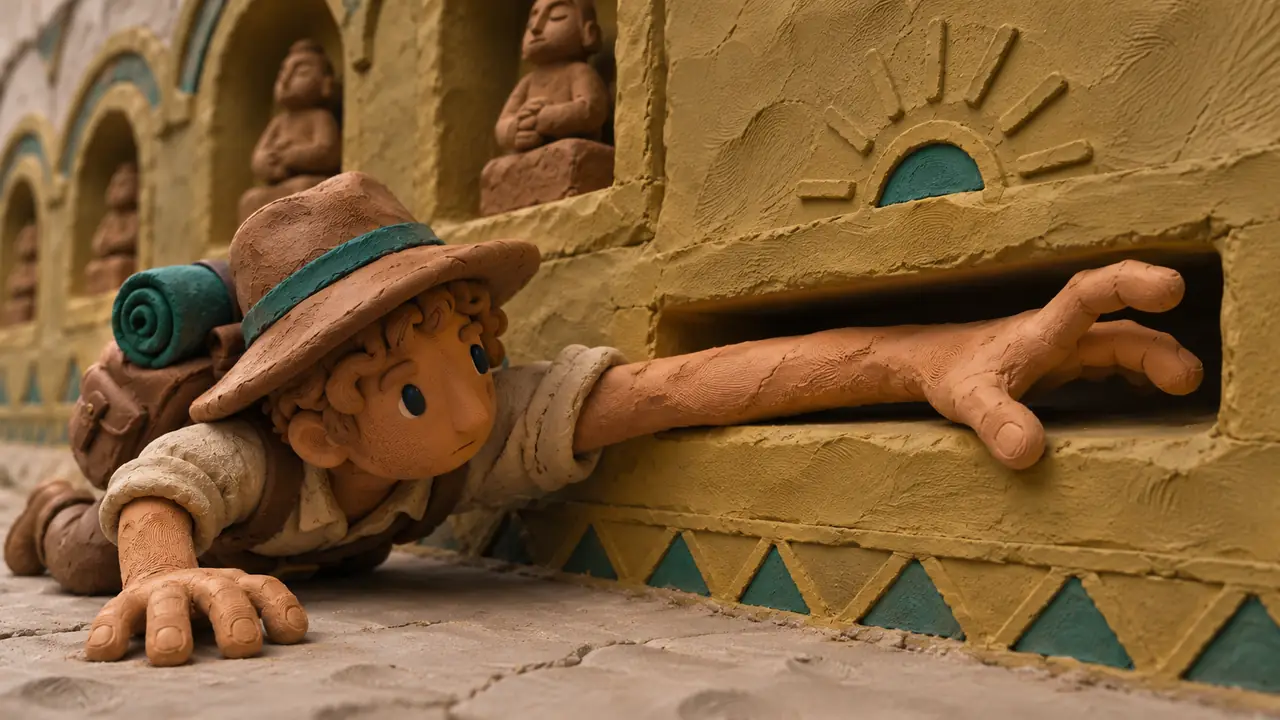
The clay traveler reaches a wall with a slot at the bottom. Their shoulders are too wide. A thumb presses along a seam and one arm becomes narrow enough to pass through. Some of its material bulges behind the elbow. That visible change matters when the traveler needs to get a good grip on the other side. Clacut Atelier develops stop-motion concepts that make those changes part of the action.
Open the material views to see what a stretched seam and a compressed hand look like at the scale of the set. The paper marks beside the clay show where the surface retained its shape and where an animator can help a viewer recognise an earlier pose. The expanded views remain part of the same page, available whenever you want to look again.
Pass through with a different grip
Palm Passage follows a clay traveler through a gallery with openings made for smaller visitors. You choose a shape, fit through a slot and test what the new hand can hold when you reach the next ledge. A compressed arm leaves a nearby bulge. The game asks how to use that extra clay before turning the limb back into its previous form.
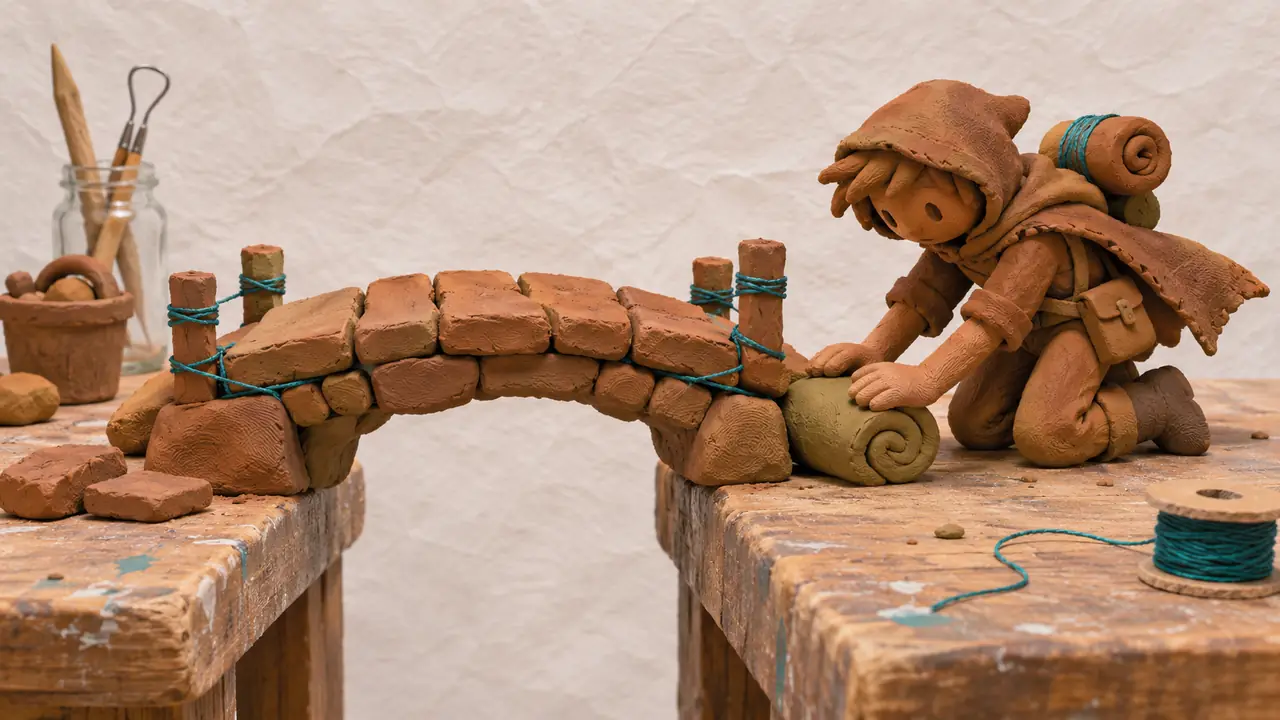
Soft Span starts in a workshop with gaps between tables. The traveler can flatten part of a clay limb against a beam and build a surface for the next step. The amount of clay used for the support makes the returning limb feel different. A second crossing may require recovering material from the earlier bridge.
Return to the cutting table
The Clay Loop lets you approach either concept through its visible shape, contact with the set or the effort of making a new pose. Each entry leads back to the same group of materials so a reader can follow another route through the work.
The Cutting Table Notes record how a pressure mark became a movement cue, why a seam persists across frames and what a soft bridge does when a traveler puts weight on it. The prototypes keep the mark from the previous move visible just long enough for it to affect the next one.